Showing posts with label Theories for Social Work practice. Show all posts

Friday, July 11, 2014

Developmental Theories

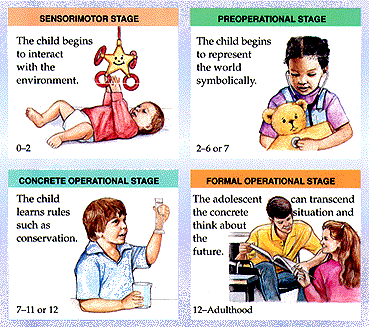
Jean Piaget's stages of Cognitive Development

4 stages of Cognitive Development
  1. Sensorimotor
  2. Preoperational
  3. concrete operational
  4. formal operational 


To View :

http://education-portal.com/academy/lesson/jean-piagets-stages-of-cognitive-development.html#lesson

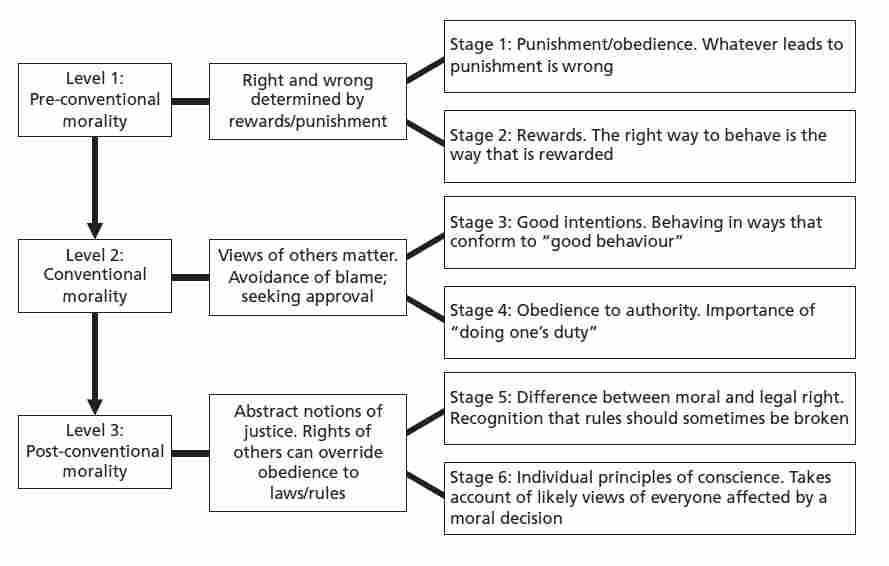
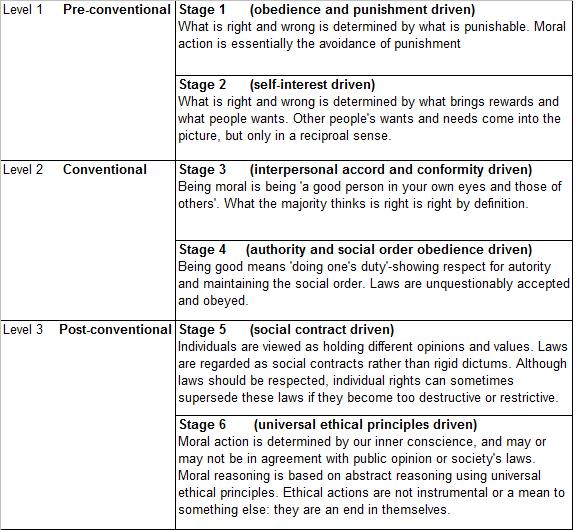
Lawrence Kholberg's stages of Moral Development
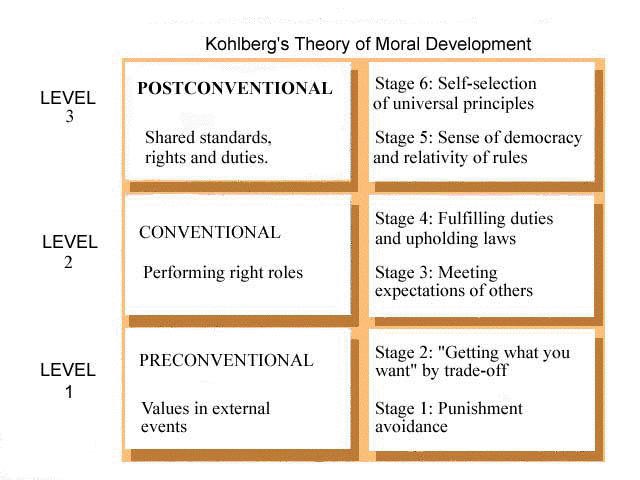


To view :


Carol Gilligan theory of Moral Development


To view :

http://education-portal.com/academy/lesson/carol-gilligans-theory-of-moral-development.html#lesson


Erickson's 8 stages of Maturation


to view :


Freud's Psychosexual stages of Development

to view : 


Margret Mahler's Stages of Development

Margret Mahler

Refer :


Maslow's hierarchy of needs


to view :


Alfred Adler's birth order


to view :


Jane Loevinger's stages of ego development

Jane Loevinger
1. Pre-social/symbiotic : lack of recognition of difference between self and non self, mother becomes different from environment
2. Impulsive : difference between self and mother, fixation with sexul and aggressive drives, implosive and exploitative and dependent
3. Opportunistic: child tries to manipulate and control others, follows rules and moralities when it is conveniently advantageous to them
4. Conformist : child develops trust, becomes very self conscious of their appreance, how others see them and their personal possessions, rules are somewhat internalized
5. conscientious : child internalizes morality regulated by ethical imperatives, disobedience results in feelings of guilt, relationship with others are intense and accountable, internal feelings and success pre occupy their thoughts
6. Autonomous : constant thoughts about self identity and fulfillment, maintaining independence in relationships, learning to deal with and accept personal conflicts, differences with others and controlling impulses
7. Integrated : grandiose or unattainable ideas from childhood are replaced, appreciate individuality in personal relationships, reconciliation of conflicts, constant thoughts of attaining an integrated identity
8. Self protective (transition stage between stage 1 and 2)
9. Self aware :(transition stage between 4 and 5 )

refer : 

http://en.wikipedia.org/wiki/Loevinger's_stages_of_ego_development


Robert Havinghurst theory of developmental task

Robert Havinghurst

Six stages of Developmental tasks


  1. Infancy and early childhood (0-6) - learning to walk, take solid foods, talk, control elimination of body waste, sex differences and sexual modesty, achieving physiological stability and forming simple concepts of social and physical reality, learning to relate oneself to parent, sibling and other people, learning to distinguish between right and wrong and developing a conscience
  2. Middle Childhood (age 6-12) - learning physical skills necessary for ordinary games, building wholesome attitude towards oneself as a growing organism, learning to get along with age mates, learning appropriate masculine and feminine social role, developing fundamental skills in reading writing and calculation, developing concepts necessary for everyday living, developing conscience, morality and a scale of values, achieving personal independence
  3. Adolescence(12-18) - achieving new and more mature relations with age mates of both sexes, achieving a masculine or feminine social role, accepting one's physique and using the body effectively, achieving emotional independence of parents and other adults, achieving assurance of economic independence, selecting and preparing for an occupation, preparing for marriage and family life, developing intellectual skills and competence necessary for civic competence, desiring and achieving socially responsible behavior, acquiring a set of values and an ethical system as a guide to behavior
  4. Early Adulthood (18-30) - selecting a mate,learning to live with a partner, starting family , rearing children, managing home, getting started in occupation, taking on civic responsibility, finding a congenial social group
  5. Middle Age (30-60) achieving adult civic and social responsibility, establishing and maintaining an economic standard of living, assisting teen age children to become responsible and happy adults, developing adult leisure time activities, relating oneself to one's spouse as a person, accepting and adjusting to physiological changes of middle age, adjusting to aging parents
  6. Later Maturity (past 60) - adjusting to decreasing physical strength and health, adjustment to retirement and reduced income, adjusting to death of a spouse, establishing an explicit affiliation with one's age group, meeting social and civic obligations, establishing satisfactory physical living arrangements
to refer :
http://www.slideshare.net/teachingandmore882/robert-j-8202628

David levinnson's Life structure or Adult Development theory


to refer :

Noam CHomsky language development

Noam Chomsky

to view:


Benjamin Whorf linguistic relativity

Benjamin Lee Whorf
Along with Edward Sapir they claim that language shape the way people think. because of differing languages cultures vary in their understanding of the world. The link between language and thought is considered bi directional.

Reference ;

https://www.google.com/url?sa=t&rct=j&q=&esrc=s&source=video&cd=2&cad=rja&uact=8&ved=0CCEQtwIwAQ&url=http%3A%2F%2Fwww.powershow.com%2Fview1%2F45550-ZDc1Z%2FAdult_Development_Theories_powerpoint_ppt_presentation&ei=eH_AU_6sC8mOyAT5j4CIDA&usg=AFQjCNFNh3d1qpad1hvfLuBHMiasdWfNDw&sig2=3F69HA4dpr_5AkqKCqd_zw&bvm=bv.70810081,d.aWw

Thursday, July 10, 2014

Syllabus

The following content is organized according to ASWB handbook. The broad areas of testing under Human Development and Behavior includes the following topics,most of which has notes in the blog itself and for several other topics posts are in process of creation and to be updated soon.

A. I. Developmental Theories


  1. Physical Development


2.  Psycho social Development - Lifespan approach 

  1. Erickson's 8 stages
  2. Theories of Mid life development /life structure theory- Daniel Levinson
  3. theories of late adulthood
  4. Margret Mahler's Stages of Development 
  5. Abraham Maslow's Heirarchy of Needs
  6. Alfred Adler importance of Birth order
  7. Freud's psychosexual stages of development
  8. Jane Lovevinger stages of ego development
  9. Robert Havinghurts stages of Developmental tasks
  10. Identity development for racial minorities by atkinson, morten and sue
  11. Donald Super's life stages

3. Cognitive and Moral Development

  • Jean Piaget's theory of cognitive development
  • Lawrence Kholbergs theory of Moral development
  • Carl Gilligan's theory of Moral Development
  • James fowler's theory of faith development


II. Systems Theories

These theories portrays people as being dynamically involved  with each system.  

III. Family Theories

  1. Diana Baumrind Parenting styles
  2. James Marcis identity theory

IV. Group Theories


  1. Theories of Group Development 
  • Garland, Jones,Kolodny model
  • Tuckman model
  • Bales model
2. Leadership Theory
  • Trait approach
  • Position Approach
  • Style approach
  • Distributed functions approach
3. French and Ravens social power base in group
4. Theories of Group Conformity (Sheriff, Asch and Milligrams experiments on group conformity)


V. Psycho dynamic Theories

  1. Psychoanalysis
  2. Object Relations
  3. Heinz kohut self psychology

VI. Behavioral , cognitive and Learning theories

1. Noam Chomsky's language development theory (7 stages of language development )
2. Benjamin Whorf (Linguistic Relativity theory)
3. Robert Sternberg (Process of Intelligence th)
4. Alfred Binet (Measuring Intelligence)
5. Howard Gardner and J P Guilford (multiple intelligence th)
6. Daniel Goleman's (emotional intelligence th)

VII. Attachment Theories


  1. Patterns of Attachment by Mary Salter Ainsworth ("The Strange Situation")

VIII. Social Learning Theory

  1. Albert Bandura's social learning theory
  2. Martin Sleigman (Learned helplessness )


IX. Conflict theories (related to power and change)

  1. Abrahams class conflict theory (endogenous and exogenous conflict)
  2. Denisoff and warhman's conflict theory
  3. karl Marx class conflict
  4. Ralf Darandhorf struggle for authority
  5. Interest group conflict 
  6. Lewis coser functions of conflict

X. Community development theories

Feminist theories
Lesbian Gay empowerment theories
Dual perspective
Bi cultural socialization
Ethnic identity

XI. Addiction theories

  1. Genetic theory
  2. Exposure theory or Biological models
  3. Exposure theory/ Conditioning model
  4. Adaptation Theory
Reference  :


XII. Communication theories

Often the knowledge and understanding we have acquired is most clearly revealed when we attempt to put words to our thoughts and feelings through the process of communication. · Communication theory identifies a range of concepts to describe how people, groups and  organisations exchange information and highlights the complexity of the meaning and messages conveyed and received · The ability to communicate is central to effective social work practice and can take many forms - through language (linguistics) and speech, the written word including email/internet, other devices, such as video/tape recordings, etc. · Non-verbal forms of communication can be vitally important, such as body language, choice of words, dress, use of space/distance (proxemics), paralanguage (speed, tone, pitch, intonation). Some elements may be unconscious to one, both or all parties · An important concept in communication theory is transferability (Trevithick 2005: 75- 76). This describes the way that knowledge and skills have to be adapted if they are to be made relevant and applicable to the different situations encountered in social work and social care. In effect, it describes ‘the ability to remake knowledge for relevance across different contexts’ (Fook 2002: 156). The transferability of knowledge and skills calls for a sound understanding of human beings in their particular social contexts and the ability to use that understanding in ways that are reliable and enduring in difficult, unfavorable or complex situations.

Reference :

http://www.slideshare.net/srengasamy/theories-of-social-work

Other topics

Adult Development
Sexual Development
Emotional Development
Cognitive Development
Social Development
Child Development
Adolescent Development
Effect of Life crisis
Normal and Abnormal Behavior
Aging process
Family Dynamics
effects of Family Dynamics on individuals
Dynamics of Grief and Loss
Interplay of Biological, psychological and social factors
Basic human needs
Gender roles
Human Genetics
Impact of environment on individuals
impact of physical, mental and cognitive disabilities on human development
impact of socio economic changes on client system
Sterngths Perspective
Cultural, racial and ethnic identity development
Effects of Body image on self and relationship

B.  Concepts of Abuse and Neglect

  • indicators and dynamics of sexual abuse
  • indicators and dynamics of psychological abuse and neglect
  • indicators and dynamics of physical abuse and neglect
  • characteristics of abuse perpetrators 
  • indicators and dynamics of exploitation
Reference : 

Defense Mechanism

Overview


  • Most notably used by Sigmund Freud in his psychoanalytic theory, adefense mechanism is a tactic developed by the ego to protect against anxiety. 
  •  Defense mechanisms are thought to safeguard the mind against feelings and thoughts that are too difficult for the conscious mind to cope with.
  • In some instances, defense mechanisms are thought to keep inappropriate or unwanted thoughts and impulses from entering the conscious mind.

To Read :

To view


To Practice :